
Best overall: brand-name vanity numbers. Best for explaining your offer: service-word vanity numbers. Best for spoken ads: repeating-digit numbers. These are the best 800 number ideas for small businesses in 2026, with local numbers and other toll-free prefixes as alternatives when an 800 number is not the right fit.
- The best 800 number ideas for small businesses start with a recognizable brand, clear service word, or simple digit pattern.
- 800andlocalnumbers sells memorable toll-free, vanity, and local numbers separately from ongoing carrier service.
- Choose a desired local area code when geographic identity matters more than a toll-free prefix.
- Confirm the exact number, purchase terms, and carrier acceptance before checkout.
Why this matters
A memorable number still has to work when someone hears it, reads it, and enters it on a phone. A clever spelling is not enough. Choose a number that fits your business without making callers decode it.
800andlocalnumbers is a fit for businesses buying a memorable phone number separately from ongoing phone service. Start your search at 800andlocalnumbers, then compare the exact digits—not just the word they spell.
What makes the best small-business phone number
Use these criteria for your 2026 shortlist:
- Clear meaning: The word names your business or tells callers what you do.
- Easy entry: A toll-free number has a 3-digit prefix and a 7-digit subscriber number. Check the complete 10-digit number.
- Spoken clarity: You can read the number aloud without explaining unusual spelling.
- Right geographic signal: A local area code suits a place-based business; a toll-free number is not tied to one local area code.
- Transfer fit: Your intended carrier confirms it can accept the exact number.
- Separate costs: Evaluate the one-time number purchase separately from ongoing carrier service.
Best number ideas at a glance
These rankings compare number formats, not specific inventory. Words and patterns are selection ideas, not claims that a particular number can be purchased.
| Rank | Number idea | Best for | Standout feature | Key limitation |
|---|---|---|---|---|
| 1 | Brand-name vanity | Businesses with a recognizable name | Connects the number to the business name | Long or unusual names are harder to fit |
| 2 | Service-word vanity | Businesses that need to explain their offer | Makes the service part of the number | Broad words do not distinguish one business |
| 3 | Repeating digits | Audio ads and spoken referrals | Gives callers a numeric pattern | A pattern does not explain the business |
| 4 | Local area code | Businesses emphasizing a specific market | Keeps the desired area code visible | It is not an 800 or toll-free number |
| 5 | Other toll-free vanity | Businesses prioritizing a word over 800 | Preserves the word-first approach | Callers must remember the actual prefix |
1. Brand-name vanity: best for a recognizable business name
A brand-name vanity number spells your business name or a clear shortened version. It suits a company whose customers already ask for it by name. Start here if the name is easy to say and fits the keypad cleanly.
Brand-name vanity pros:
- Reinforces the same name you use elsewhere.
- Gives you a consistent phrase for print and spoken ads.
- Does not tie the number to one service category.
Brand-name vanity cons:
- Long names need shortening.
- Unusual spellings require explanation.
Best for: Businesses with short, recognizable names.
Test the spelling on an ordinary phone keypad. Do not treat extra letters as a substitute for checking the actual dialable number.
Verdict: Buy a brand-name vanity number when the spelling is obvious. Skip forced abbreviations.
2. Service-word vanity: best for explaining what you sell
A service-word vanity number uses a plain category word rather than the company name. Words such as catering, tutoring, or storage show the direction of the idea; they are not specific number recommendations.
Choose the term your customers use. Internal terminology belongs in your operations manual, not your phone number.
Service-word vanity pros:
- Gives unfamiliar callers immediate context.
- Puts the service into your advertising message.
- Works as a starting point when your brand name is too long.
Service-word vanity cons:
- A generic word does not identify your company by itself.
- A narrow service word can become restrictive if your offer changes.
Best for: Businesses introducing a clear service to new customers.
For a 2026 purchase, consider whether the word describes the business you intend to keep operating—not just the campaign you are running now.
Verdict: Buy a clear service word. Skip jargon and narrow terms that do not fit your plans.
3. Repeating digits: best for spoken ads and referrals
A repeating-digit number uses recurring digits or a recognizable numeric sequence instead of a word. Compare the entire number, including the prefix. An attractive ending does not fix an awkward middle.
This is also where premium 800 numbers deserve a closer look. If you specifically want 800, compare the clarity of the full number rather than choosing on the prefix alone.
Repeating-digit pros:
- Avoids spelling instructions.
- Gives you a consistent numeric rhythm when speaking.
- Does not depend on a particular business name or service word.
Repeating-digit cons:
- Does not tell callers what your business does.
- Requires checking that the pattern remains clear when spoken aloud.
Best for: Businesses that regularly say their number in ads, presentations, or referrals.
Read each candidate at normal speed. Ask someone to repeat it back without seeing it. Use that exercise to reject confusing candidates, not to promise a particular marketing result.
Verdict: Buy a clean full-number pattern. Skip a premium label without a clear reason to prefer the number.
4. Local area code: best for a specific geographic market
A local number is an alternative to an 800 number, not a type of toll-free number. Choose it when displaying a desired area code matters more than displaying a toll-free prefix.
Start with the area code you want, then evaluate the remaining digits. Do not accept an awkward number solely because the geographic prefix fits.
Local-number pros:
- Displays the area code associated with your chosen market.
- Lets you prioritize geographic identity.
- Gives you another route when your preferred toll-free format does not fit.
Local-number cons:
- Does not provide a toll-free prefix.
- One area code does not represent every market you serve.
Best for: Businesses that want a recognizable local contact number.
Ask 800andlocalnumbers for help finding a specific number or desired area code. Tell the seller which requirement comes first: the area code, the word, or the digit pattern.
Verdict: Buy local when the area code is part of your selection criteria. Skip it when toll-free calling is a requirement.
5. Other toll-free vanity: best for keeping your preferred word
An 800 prefix is one toll-free option. Other toll-free prefixes, such as 888 and 877, let you consider a vanity format without requiring 800 specifically.
The prefix remains part of the number. Display and say it every time rather than assuming callers will supply the right one.
Other toll-free vanity pros:
- Keeps the search focused on your chosen word.
- Retains a toll-free number format.
- Gives you alternatives to an 800-only search.
Other toll-free vanity cons:
- The same word under another prefix is a different number.
- Your advertising must make the prefix clear.
Best for: Businesses that value a particular vanity word more than the 800 prefix.
Verdict: Buy another toll-free prefix when the word fits. Skip it if 800 is a firm requirement.
How these ideas are ranked
Brand-name vanity ranks first for connecting the number to a recognizable business. Service-word vanity prioritizes explanation; repeating digits prioritize spoken use. Local numbers and other toll-free prefixes address different selection requirements rather than serving as automatic substitutes.
The 2026 ranking uses clarity, keypad fit, geographic identity, and transfer checks. It does not claim measured differences in calls or sales.
Purchase the number, then arrange service
Buying a number and paying for phone service are separate transactions. At 800andlocalnumbers, the number is a one-time purchase. You pay your carrier for ongoing service.
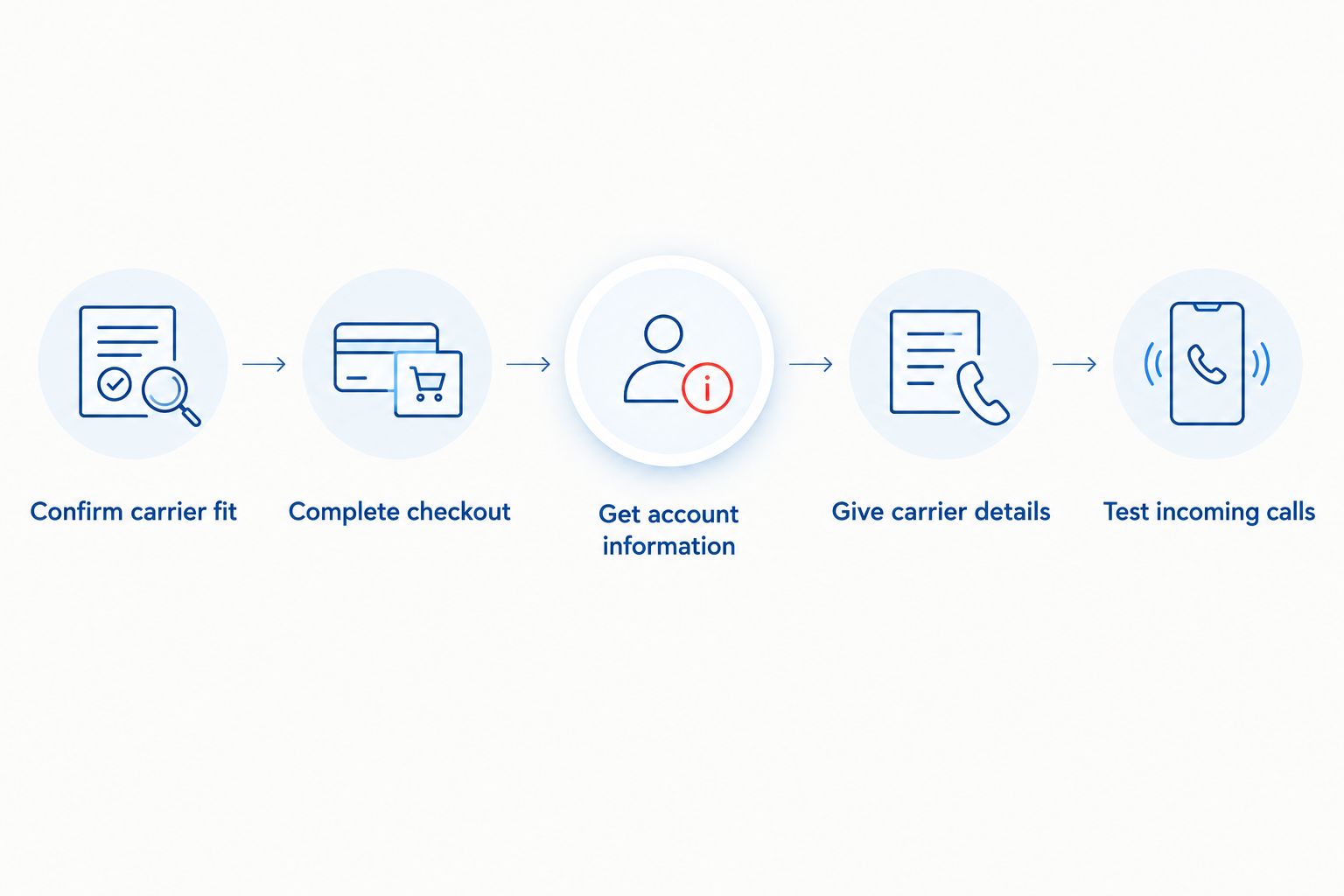
Use this sequence:
- Confirm carrier fit: Ask your intended carrier whether it can accept the exact number and support the functions you need.
- Complete checkout: Review the exact digits and purchase terms before paying.
- Get account information: Obtain the information required for the transfer.
- Give carrier details: Submit that information to your receiving carrier and follow its instructions.
- Test incoming calls: Confirm calls reach the intended destination before publishing the number broadly.
Do not set a launch date around an assumed transfer deadline. Get the transfer requirements and timing from the receiving carrier.
Which number should you choose?
Start with a brand-name vanity number if your name is short and easy to spell. Choose a service word when the number needs to explain your offer. Choose repeating digits when you want a numeric format for spoken use.
Keep local area codes and premium 800 numbers on separate tracks. One prioritizes geographic identity; the other preserves the specific toll-free prefix you want. Neither removes the need to check the complete number and carrier requirements.
FAQ
What's the best 800 number idea for a small business?
A brand-name vanity number is the first option to consider when your business name is short and easy to spell. Choose a service word or repeating-digit pattern when your name does not fit cleanly.
Should I buy a premium 800 number or a local number?
Choose a premium 800 number when the 800 prefix is a requirement; choose a local number when a desired area code matters more. Compare the complete number rather than selecting on the prefix alone.
Does buying a business phone number include phone service?
Buying a number from 800andlocalnumbers is separate from ongoing phone service. The number is a one-time purchase, and you pay your carrier for service.
How much does a memorable business number cost?
Check the purchase amount for the exact number you are considering. Review that one-time purchase separately from your carrier's ongoing service charges.
Can I transfer a purchased number to my carrier?
Confirm acceptance of the exact number with your intended carrier before purchasing. After checkout, obtain the account information and give it to the receiving carrier for the transfer.
Are 888 and 877 numbers the same as 800 numbers?
888, 877, and 800 are toll-free prefixes, but they identify different numbers. Include the complete prefix whenever you display or say your number.
How do I check a vanity number before buying it?
Map the letters to a phone keypad and verify the complete dialable number. Read it aloud, check the spelling, and confirm that your carrier can accept it.
One last thing
Before committing to a number in 2026, write the full digits beside the vanity spelling. Buy the number you can explain clearly—not the clever phrase that needs instructions.