Best overall: DENTIST. Best for a neighborhood practice: a memorable local number in your desired area code. Best for pediatric dentistry: KIDSDDS. These are the best vanity phone number ideas for dental practices to shortlist in 2026; the word patterns below are ideas, not specific numbers offered for purchase.
- The best vanity phone number ideas for dental practices start with DENTIST: clear wording before clever spelling.
- Choose a memorable local number when your desired area code matters more than spelling a word.
- Use KIDSDDS for pediatric dentistry and IMPLANT for an implant-focused campaign.
- 800andlocalnumbers sells numbers through one-time purchases; your carrier handles ongoing phone service.
Why your number choice matters
Your dental practice needs a number that fits both your services and the way you advertise. A word-based number suits a spoken message. A memorable local number keeps your desired area code without forcing your practice name onto a keypad.
800andlocalnumbers is best for dental practices buying a memorable number separately from their ongoing carrier service. Start your 2026 shortlist at 800andlocalnumbers, then compare the exact digits, word pattern, and transfer requirements before purchasing.
What makes the best dental vanity number?
Judge your 2026 shortlist against these criteria before choosing a favorite:
- Clear meaning: The word should point to dentistry or the specific treatment you promote.
- Clean spelling: Avoid words you must explain, abbreviate awkwardly, or spell twice.
- Correct length: DENTIST, KIDSDDS, IMPLANT, and MYTEETH each contain seven letters, matching the seven digits after a US area code.
- Right prefix: Choose a local area code for a geographic identity or a toll-free prefix for a number without a local area-code identity.
- Service fit: A treatment-specific number should lead to the treatment you actually offer.
- Transfer fit: Ask your carrier to confirm it can accept and support the exact number before you buy.
For premium 800 numbers, judge the complete combination: prefix, wording, and digits. An 800 prefix does not fix a confusing word. A straightforward local number deserves a place on the same shortlist.
Dental vanity number ideas at a glance
| Rank | Number idea | Best for | Standout feature | Key limitation |
|---|---|---|---|---|
| 1 | DENTIST | General dentistry | Names the profession directly | Does not distinguish your practice name |
| 2 | Memorable local digits | A neighborhood practice | Keeps your desired area code | Does not spell your service |
| 3 | KIDSDDS | Pediatric dentistry | Combines a patient group with a dental credential | DDS is professional shorthand |
| 4 | IMPLANT | Implant-focused advertising | Names the treatment directly | Too narrow for a broad practice message |
| 5 | MYTEETH | Patient-facing general dentistry | Uses familiar, patient-centered words | Does not explicitly say dentist |
Each word pattern needs an exact digit sequence and a prefix. Compare the complete number, not just the word on paper.
1. DENTIST: best vanity idea for general dentistry
DENTIST says what your business does without a slogan. Its seven letters fit the standard seven-digit portion of a US phone number, making it a direct starting point for a dental vanity search.
Consider the word with a local prefix, an 800 prefix, or another toll-free prefix. Keep the prefix visible whenever you publish the number so patients see the complete dialing sequence.
DENTIST pros:
- Names the profession directly.
- Uses an ordinary word rather than an abbreviation.
- Fits a practice offering several dental services.
DENTIST cons:
- Does not communicate your practice name.
- Does not distinguish a specialty or patient group.
Best for: General dental practices that want their main number to describe the business.
Verdict: Buy a DENTIST-pattern number when the full number fits your practice and your carrier confirms transfer support.
2. Memorable local digits: best for a desired area code
A vanity number does not have to spell a word. Repeated digits or a clear numeric pattern can give you a memorable number while retaining the area code you want.
Start with the desired three-digit area code, then compare the remaining seven digits. Read the complete number aloud; a tidy ending should not distract you from an awkward full sequence.
Memorable local digits pros:
- Keep your chosen local area code.
- Avoid spelling instructions.
- Leave your service mix unrestricted by a word.
Memorable local digits cons:
- Do not identify dentistry by themselves.
- Need your practice name or service description alongside them in advertising.
Best for: A neighborhood dental practice that prioritizes a specific area code over a toll-free identity.
Verdict: Buy a memorable local number when geography is central to your choice. Do not force a weaker word pattern instead.
3. KIDSDDS: best vanity idea for pediatric dentistry
KIDSDDS combines a clear patient group with dental shorthand. The seven-letter pattern keeps the focus on children rather than trying to cover every type of dental care.
Use this direction only when the wording accurately represents your practice and credentials. The word KIDS is plain; DDS still needs to make sense to your intended audience.
KIDSDDS pros:
- Identifies children as the intended patients.
- Fits the seven-letter format.
- Keeps the wording focused on pediatric care.
KIDSDDS cons:
- Uses a credential abbreviation instead of a plain service word.
- Does not suit a message centered on adult dentistry.
Best for: A child-focused practice whose credentials and positioning match the wording.
Verdict: Buy only when KIDSDDS accurately describes the practice. Skip it when the abbreviation creates confusion.
4. IMPLANT: best vanity idea for implant advertising
IMPLANT puts a treatment at the center of the number. Its seven letters fit the same format as DENTIST, but its meaning is much narrower.
That focus suits an implant campaign. It is a weaker choice for a main practice number that must also represent cleanings, fillings, and other services.
IMPLANT pros:
- Names the treatment directly.
- Uses a complete word without abbreviations.
- Gives an implant campaign a matching contact identity.
IMPLANT cons:
- Does not describe the full scope of general dentistry.
- Needs dental context because implants are not exclusive to dentistry.
Best for: A dental practice advertising implant services with a dedicated message.
Verdict: Buy for an implant-specific campaign. Skip it as the default number when your main message covers general dentistry.
5. MYTEETH: best vanity idea for patient-friendly wording
MYTEETH uses the patient's perspective rather than a professional title. It contains seven letters and avoids credentials or clinical terminology.
Pair it with a clear dental practice name in your advertising. The phrase points to teeth, but it does not identify a dentist or a particular service on its own.
MYTEETH pros:
- Uses familiar words.
- Avoids professional abbreviations.
- Does not restrict the number to one treatment.
MYTEETH cons:
- Does not explicitly identify a dental practice.
- Needs supporting context to explain the business.
Best for: General dental practices that prefer everyday language over a professional label.
Verdict: Buy when patient-friendly wording is the priority. Choose DENTIST when immediate business identification matters more.
How these ideas rank
This 2026 ranking puts clear meaning ahead of cleverness. DENTIST leads on service identification; memorable local digits lead when a desired area code is the deciding factor.
The specialist options serve different jobs. KIDSDDS names an audience, IMPLANT names a treatment, and MYTEETH uses patient-centered language. None earns its place through a claimed increase in calls or bookings.
Choose the number, then arrange service
A one-time number purchase is not ongoing phone service. With 800andlocalnumbers, you purchase the number; you pay your carrier separately for service.
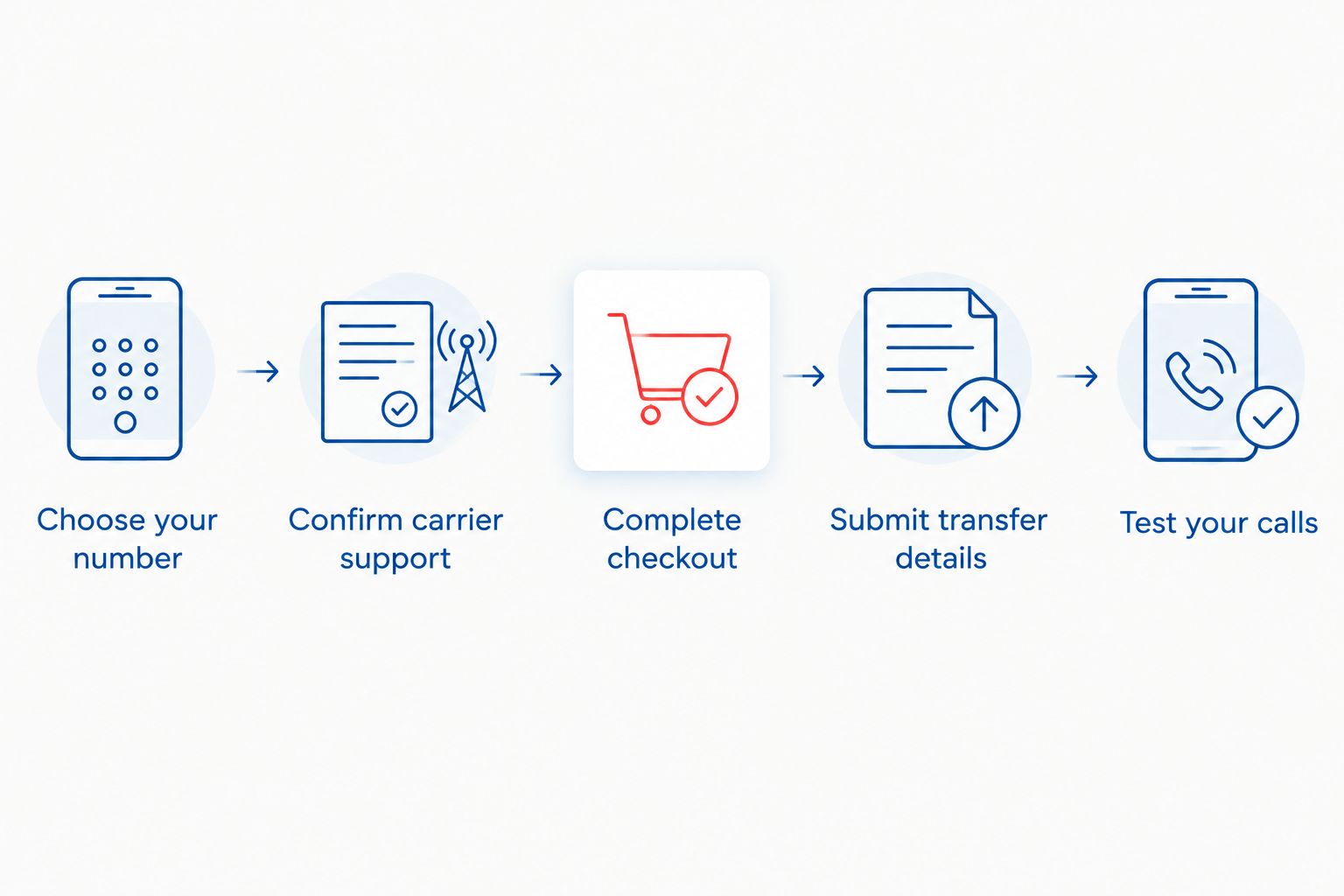
Use this order before putting a new number on your signage or website:
- Choose your number. Compare the full digits, desired area code, and wording. Ask for help finding a specific number or area code when needed.
- Confirm carrier support. Give your intended carrier the exact number. Confirm transfer requirements and the calling features you need, including texting if relevant.
- Complete checkout. Review the one-time number charge separately from your carrier's service charges.
- Submit transfer details. Get the account information and provide it to the receiving carrier.
- Test your calls. After the carrier completes the transfer, check incoming calls and routing before updating advertisements.
Do not assume a premium 800 number includes a phone plan, texting, or a completed transfer. Treat the number purchase and carrier setup as separate decisions, and confirm each before committing.
Which dental vanity number should you choose?
Choose DENTIST as the default word pattern. Choose a memorable local number when your desired area code matters more. Those are the clearest starting points for a general dental practice.
For a narrower campaign, match the number to the message. Use KIDSDDS only when the wording and credentials fit, and IMPLANT only when treatment-specific positioning is intentional. Choose MYTEETH when everyday language is the stronger fit.
FAQ
What's the best vanity phone number idea for a dental practice?
DENTIST is the clearest starting word pattern for general dentistry because it names the profession directly. Compare the complete number and prefix before choosing it.
Should a dentist buy a local number or an 800 number?
Choose a local number when a desired area code is central to your practice identity. Consider an 800 number when you prefer a toll-free identity without a local area code.
Does a dental vanity number have to spell a word?
No. A local number with repeated digits or a clear numeric pattern is another option when you want memorable digits without spelling instructions.
How much does a dental vanity number cost?
Check the exact number's one-time purchase charge before checkout. Carrier service is a separate ongoing expense, so compare both parts of the purchase.
Can I transfer a purchased number to my carrier?
Confirm the exact number with your receiving carrier before purchasing. After checkout, obtain the account information and submit it through the carrier's transfer process.
Does buying a number from 800andlocalnumbers include phone service?
No. 800andlocalnumbers sells numbers through one-time purchases; you pay your carrier separately for ongoing phone service.
Is a premium 800 number better than another toll-free number?
Not automatically. Compare the exact wording, complete digits, and one-time number charge rather than choosing solely because of the prefix.
One last thing
Before your 2026 number purchase, say the complete number aloud without showing anyone the spelling. Ask someone to write it down, then compare the digits.
If you have to explain the word twice, choose a simpler pattern. A number should make contacting your dental practice easier, not create another instruction.